|
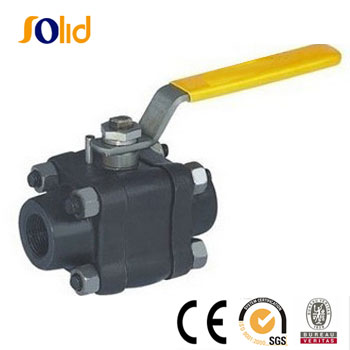
Industrial-grade forged steel ball valves are widely used in harsh working conditions such as petrochemical, natural gas, electric power, and municipal pipe networks characterized by high temperature, high pressure, flammability, and explosion hazard, thanks to their high strength, high-pressure resistance, and impact resistance.
I. Clarify Working Condition Parameters to Lock in the Basic Selection Range
Working condition parameters are the primary basis for selection, directly determining the pressure resistance, temperature resistance, and adaptability of the valve. The following indicators must be confirmed one by one:
1. Pressure and Temperature Ratings
The common pressure ratings of industrial-grade forged steel ball valves range from Class 150 to Class 2500, with a typical temperature application range of -29℃ to 600℃, which must match the nominal pressure and medium operating temperature of the pipeline.
· For high-pressure working conditions, priority should be given to valves with Class 600 and above ratings. The valve body should be made of high-strength materials such as forged A105 and F304/316 stainless steel.
· For low-temperature working conditions, low-temperature forged steel materials should be selected, and the valve must undergo low-temperature impact testing to prevent low-temperature embrittlement.
2. Medium Characteristics
It is necessary to clarify the corrosiveness, viscosity, and particle content of the conveying medium:
· For corrosive media, priority should be given to stainless steel forged steel ball valves or alloy forged steel ball valves. The sealing surface should be overlay-welded with hard alloy to enhance corrosion resistance.
· For media containing particles, wear-resistant forged steel ball valves are required. The inner surface of the valve body should be treated with a wear-resistant coating to avoid internal leakage caused by wear between the ball and valve seat.
· For flammable and explosive media, anti-static structure ball valves should be selected to ensure electrostatic discharge between the ball and valve stem, eliminating potential safety hazards.
3. Nominal Diameter Specification
The nominal diameter range of industrial-grade forged steel ball valves is mostly DN15 to DN300, which must be consistent with the nominal diameter of the pipeline. Meanwhile, a medium flow rate should be taken into consideration: a trunnion-mounted ball structure is recommended for large-diameter pipelines, while a floating ball structure can be used for small-diameter high-pressure pipelines.
II. Identify Materials and Craftsmanship to Ensure Long-term Durability
The core advantage of industrial-grade forged steel ball valves lies in the high strength brought by forging craftsmanship. Focus should be paid to the material and craftsmanship details during selection:
1. Valve Body Material
Mainstream forged steel materials and their applicable scenarios:
· Carbon steel forging: With low cost and high strength, it is suitable for non-corrosive media such as oil, water, and steam, and is the most commonly used industrial-grade material.
· Stainless Steel Forging: Stainless steel offers strong corrosion resistance, making it suitable for environments with weak acids, weak alkalis, and chloride-containing media. It is widely utilized in the chemical industry.
· Alloy Steel Forging: Alloy steel exhibits excellent resistance to high temperatures, making it ideal for applications involving high-temperature steam and oil. It is commonly used in power plants and the metallurgical industry.
2. Sealing Surface Material
The sealing surface is the key to preventing valve leakage, and should be selected according to the medium:
· For general working conditions: The valve body and ball are made of the same material, and the sealing surface is overlay-welded with Stellite for wear and corrosion resistance.
· For strong corrosive working conditions: The sealing surface is made of PTFE or PEEK materials, suitable for acid and alkali media.
3. Forging Craftsmanship
High-quality forged steel ball valves must adopt integral forging technology, with no defects such as sand holes, air holes, or cracks in the valve body. They must also undergo ultrasonic flaw detection to ensure uniform internal structure. Avoid products using cast valve bodies pretending to be forged steel valves, as such products have poor pressure resistance and are prone to rupture under high-pressure working conditions.
Summary
The core logic of selecting industrial-grade forged steel ball valves is "setting parameters for working conditions and materials for structure", which requires precise matching based on pressure, temperature, and medium characteristics, while verifying process and standard compliance to ensure safe and stable operation of the valve in harsh industrial environments.
|